Medical notice. This page is for information only. It is not medical advice and does not replace a doctor. Severe abdominal pain needs urgent care — call 112 or go to hospital. See the medical disclaimer.
Yes. Acute pancreatitis can be life-threatening, but most people recover. About 4 out of 5 improve quickly; about 1 in 5 are severe and can lead to multi-organ failure. Published mortality figures below are group statistics — not a personal prognosis. Know the NHS warning signs and get help early.
Watch: Osmosis / Elsevier — acute pancreatitis (medical education). Not medical advice.
Direct answer
NHS: acute pancreatitis can be life-threatening. Most people start to get better within a week and leave hospital in 5 to 10 days. Most recover fully. Complications can include necrotizing pancreatitis (pancreatic necrosis), cysts, and later chronic pancreatitis. (NHS, last reviewed 11 March 2026)
NIDDK: either acute or chronic pancreatitis is serious. Complications can include heart, lung or kidney failure and death. Most people with acute pancreatitis get better. (NIDDK)
For how long people live after an attack versus with long-term scarring, see Pancreatitis life expectancy. Severity grades (mild, moderately severe, severe) are explained on 4 stages of acute pancreatitis — clinicians do not use a four-stage Atlanta ladder.
When to call emergency services
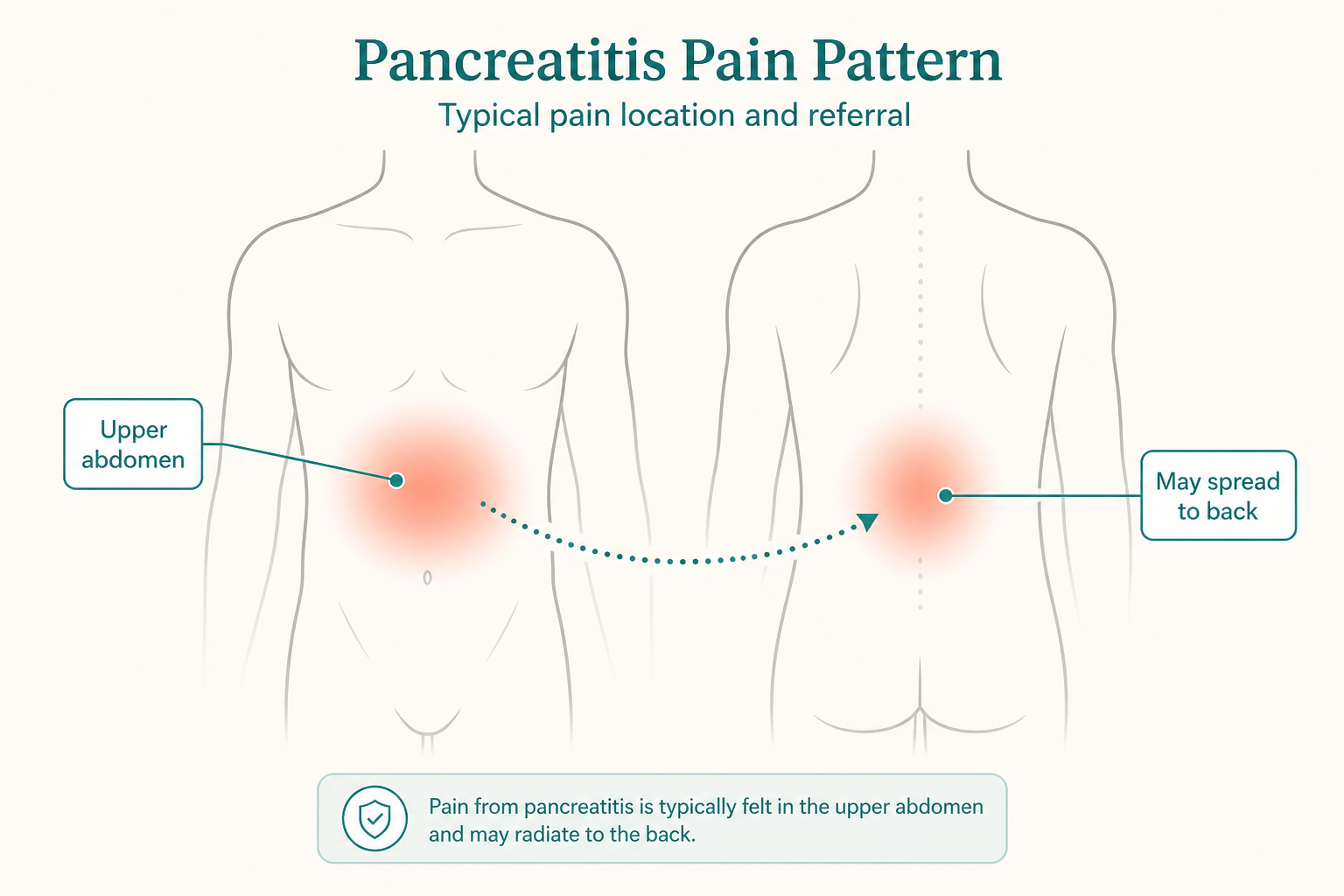
NHS says to call 999 or go to A&E if you have sudden severe tummy (abdominal) pain, and especially if:
- the pain spreads to your back
- you also have a swollen or bloated tummy
- you have a fast heartbeat or difficulty breathing
- you have blue or bruised skin around the belly button, waist or thighs
NHS also says to contact a GP or call 111 as soon as possible if you have sudden severe tummy pain and a high temperature (fever) or feel shivery. In much of Europe the emergency number is 112. Do not wait to “match” yourself to a website table. (NHS, last reviewed 11 March 2026)
How often is pancreatitis fatal?
These are published group figures. They are not your personal risk.
| Source | What it reports | Notes |
|---|---|---|
| NHS Inform | About 4/5 improve quickly; about 1/5 severe — can cause multi-organ failure and high risk of being fatal | Last updated 24 Aug 2026 |
| NICE NG104 (UK context) | Overall mortality about 5%; in the more severe group (about 25% of cases in that summary) mortality about 25% | Context chapter, not a personal calculator |
| IAP/APA 2013 | Mortality up to 30% in severe acute pancreatitis | Besselink MG, van Santvoort HC, Werner J; Banks PA, Vege SS on executive committee |
| Banks et al., Gut 2013 | Persistent organ failure in the first few days — published mortality as great as 36–50% | Revised Atlanta classification |
| Werge et al., Pancreatology 2016 | Sterile necrosis 13%; infected necrosis 28%; infection + organ failure 35.2%; infected necrosis without organ failure 1.4% | Pooled research; not a personal forecast |
| NHS Inform (infected necrosis) | Infected pancreatic necrosis in about 1/3 of severe cases; untreated described as almost always fatal; even with care about 1/5 die from organ failure with infected necrosis; SIRS in about 1/10 of severe cases | Same NHS Inform page |
Sources: NHS Inform, last updated 24 August 2026; NICE NG104; IAP/APA, 2013; Banks et al., Gut, 2013; Werge et al., 2016.
We do not average these percentages into one “death rate”. Different sources count different groups (all admissions vs severe disease vs necrosis with or without organ failure).
Severe disease, necrosis and organ failure
About 1 in 5 acute cases are severe and can lead to life-threatening complications such as multiple organ failure. (NHS Inform, last updated 24 August 2026)
Necrotizing pancreatitis means some pancreatic or nearby tissue has died. It may stay sterile or become infected. NHS Inform: infected necrosis occurs in around 1 in 3 severe cases, often 2 to 6 weeks after symptoms start. Untreated, they describe it as almost always fatal; even with high standards of care, about 1 in 5 die from organ failure with infected necrosis. Systemic inflammatory response syndrome (SIRS) is described in about 1 in 10 severe cases. (NHS Inform)
Werge M, Novovic S, Schmidt PN and Gluud LL pooled 71 studies (6,970 patients): mortality 13% with sterile necrosis, 28% with infected necrosis, 35.2% when infection and organ failure occurred together, and 1.4% if infected necrosis had no organ failure. (Werge et al., Pancreatology, 2016)
Banks PA, Bollen TL, Dervenis C, Vege SS and colleagues: people who develop persistent organ failure in the first few days are at increased risk of death, with published mortality as great as 36–50% in that group. Infected necrosis on top of persistent organ failure is described as carrying an extremely high mortality. (Banks et al., Gut, 2013)
IAP/APA (Besselink MG, van Santvoort HC, Werner J; Banks PA and Vege SS on the executive committee) note mortality up to 30% in severe acute pancreatitis. (IAP/APA, 2013)
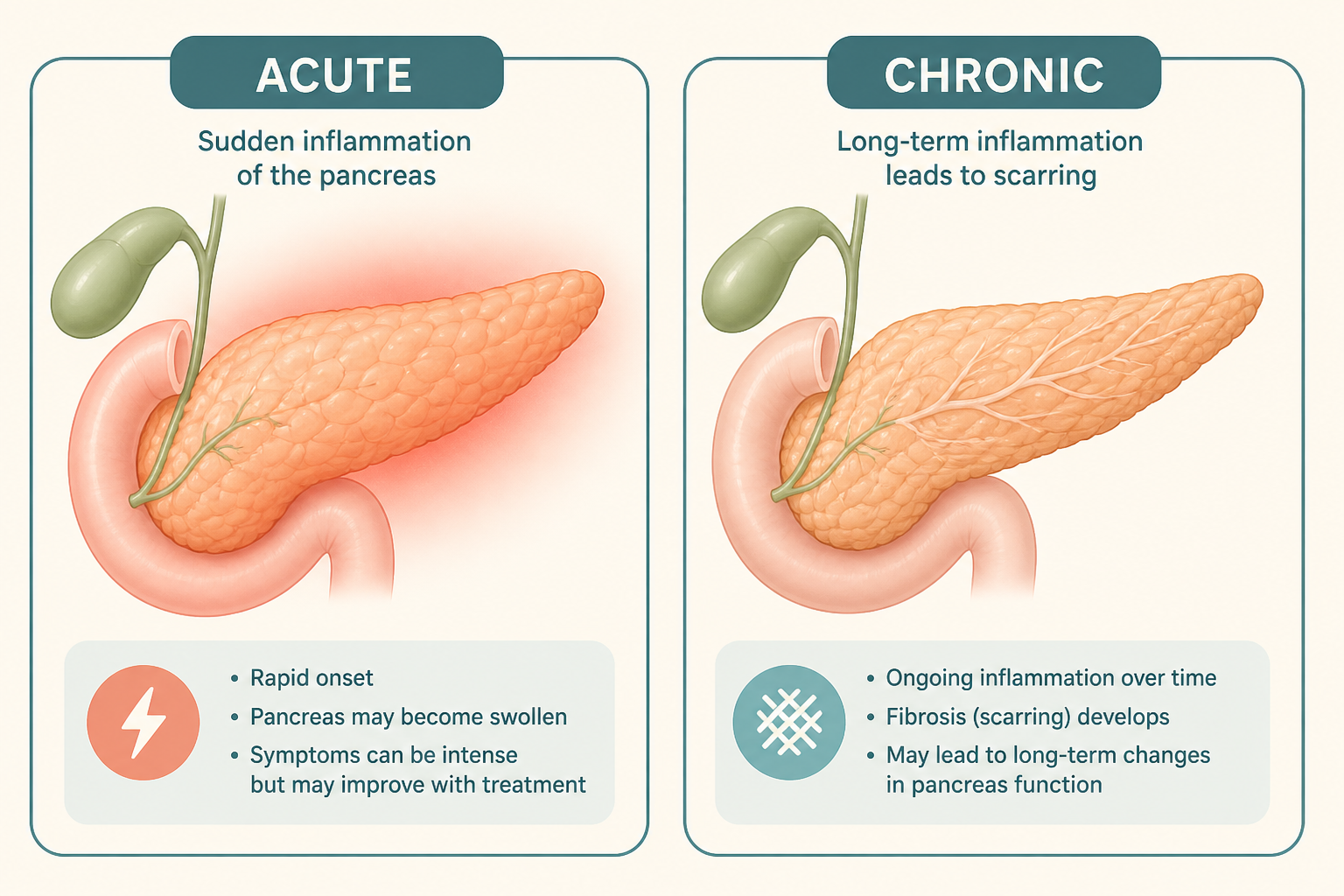
Chronic pancreatitis and death
NHS: chronic pancreatitis is a long-term condition with currently no cure. It can affect how long you live, although this is different for everybody. Most people live with it for many years. Not drinking alcohol and not smoking can help slow damage and reduce other problems. (NHS, last reviewed 20 October 2025)
There is no reliable sourced figure on this site for “dying in your sleep” from pancreatitis. That phrase is common in search results; we do not invent a percentage. If you have sudden severe tummy pain, fever with severe pain, difficulty breathing, or the blue/bruised skin signs NHS lists, treat it as an emergency — not as a sleep-related statistic. See Pancreatitis life expectancy for named survival studies.
What we are not claiming
- We do not turn NICE’s 5%, IAP/APA’s up to 30%, Banks’ 36–50%, or Werge’s 13% / 28% / 35.2% into “your” percentage.
- We do not invent a “die in your sleep” rate.
- We omit unverified blog figures. Named papers and pages are listed on Sources.
- Classification and prognosis are done in hospital. Sudden severe tummy pain: call 112.
Key takeaways
- Most people with acute pancreatitis recover; NHS: often leave hospital in 5–10 days.
- About 1 in 5 cases are severe and can cause multi-organ failure; overall published mortality in UK NICE context is about 5%.
- Warning signs that need emergency care include sudden severe tummy pain (especially to the back), bloating, fast heartbeat or breathing difficulty, and blue/bruised skin around the belly button, waist or thighs.
- Infected necrosis plus organ failure carries the highest published group mortality in the sources above; sterile necrosis and infection without organ failure are reported differently.
- Chronic pancreatitis can affect lifespan; most people still live with it for many years. Stop alcohol and smoking as NHS advises.
- These are group figures — ask the team looking after you what applies in your case.
FAQ
Can you die from pancreatitis?
Yes. Acute pancreatitis can be life-threatening. Most people still recover. Severe disease with persistent organ failure or infected necrosis has higher published mortality. (NHS; NICE NG104)
What are pancreatitis death symptoms or warning signs?
NHS lists sudden severe tummy pain (especially spreading to the back), bloating, fast heartbeat or difficulty breathing, and blue or bruised skin around the belly button, waist or thighs as reasons for 999/A&E. Fever or feeling shivery with sudden severe pain needs urgent GP/111 contact. In much of Europe use 112. (NHS)
What is the death rate of acute pancreatitis?
NICE UK context: overall about 5%; about 25% in the more severe subgroup they describe. IAP/APA: up to 30% in severe disease. Banks et al.: as great as 36–50% with persistent organ failure in the first days. These are not interchangeable personal risks. (NICE NG104; IAP/APA, 2013; Banks et al., 2013)
Is necrotizing pancreatitis always fatal?
No. Werge et al. reported much lower mortality when organ failure is absent, and higher mortality when infection and organ failure occur together. See Necrotizing pancreatitis. (Werge et al., 2016)
Can you die from chronic pancreatitis in your sleep?
There is no reliable sourced figure for that specific phrase on this site. Chronic pancreatitis can affect how long you live; NHS says most people live with it for many years. Seek emergency care for the acute warning signs above. (NHS)
Where can I read more about outlook?
Pancreatitis life expectancy and Sources.
See also: Pancreatitis life expectancy · Necrotizing pancreatitis · Acute pancreatitis · 4 stages of acute pancreatitis · Sources
Last editorial check: 4 September 2026. Not medically reviewed by a clinician.