Urgent. Acute pancreatitis is a serious condition. It needs treatment in hospital straight away. If you have sudden, severe tummy pain — especially pain that spreads to your back, with vomiting, fever, a fast heartbeat, or trouble breathing — call 112 or go to emergency care. Do not drive yourself if you can avoid it.
This page is not medical advice. Full notice: Medical disclaimer.
Acute pancreatitis is when the pancreas suddenly becomes swollen and painful (inflamed). It is different from chronic pancreatitis, in which the gland is permanently damaged. (NHS, last reviewed 11 March 2026)
Most people with acute pancreatitis get better, and the illness goes away in several days with treatment. Some have a severe form that needs a long hospital stay. The condition can be life-threatening; you will be monitored in hospital for complications. (NIDDK; NHS)
Symptoms
The main symptom is pain in the abdomen. NHS describes the pain as often starting suddenly and not going away; it may be severe, sharp, or knife-like. It may affect the upper tummy (between the ribs), one side, or the whole tummy; spread to the sides and back; feel worse after eating, moving, or lying down; and feel better when you lean forward or bring your knees to your chest. (NHS)
Other symptoms can include:
- nausea and vomiting
- fever
- fast heartbeat
- a swollen or tender abdomen
- shortness of breath
(NIDDK; Mayo Clinic)
People with acute pancreatitis usually look and feel seriously ill. Symptoms can resemble other problems such as appendicitis or a stomach ulcer — which is one reason you need a clinician, not a self-diagnosis. (NIDDK; NHS)
Seek care right away for severe or worsening abdominal pain or tenderness, nausea and vomiting, fever or chills, a fast heartbeat, shortness of breath, or yellowing of the skin or eyes (jaundice). Untreated, serious infection, inflammation, or blockage can be fatal. (NIDDK)
NHS says to call emergency services or go to A&E if sudden severe tummy pain is spreading to your back; you have bloating that does not go away; a fast heartbeat or difficulty breathing; or blue/bruised skin around the belly button, waist, or upper outer thigh. (NHS)
Causes
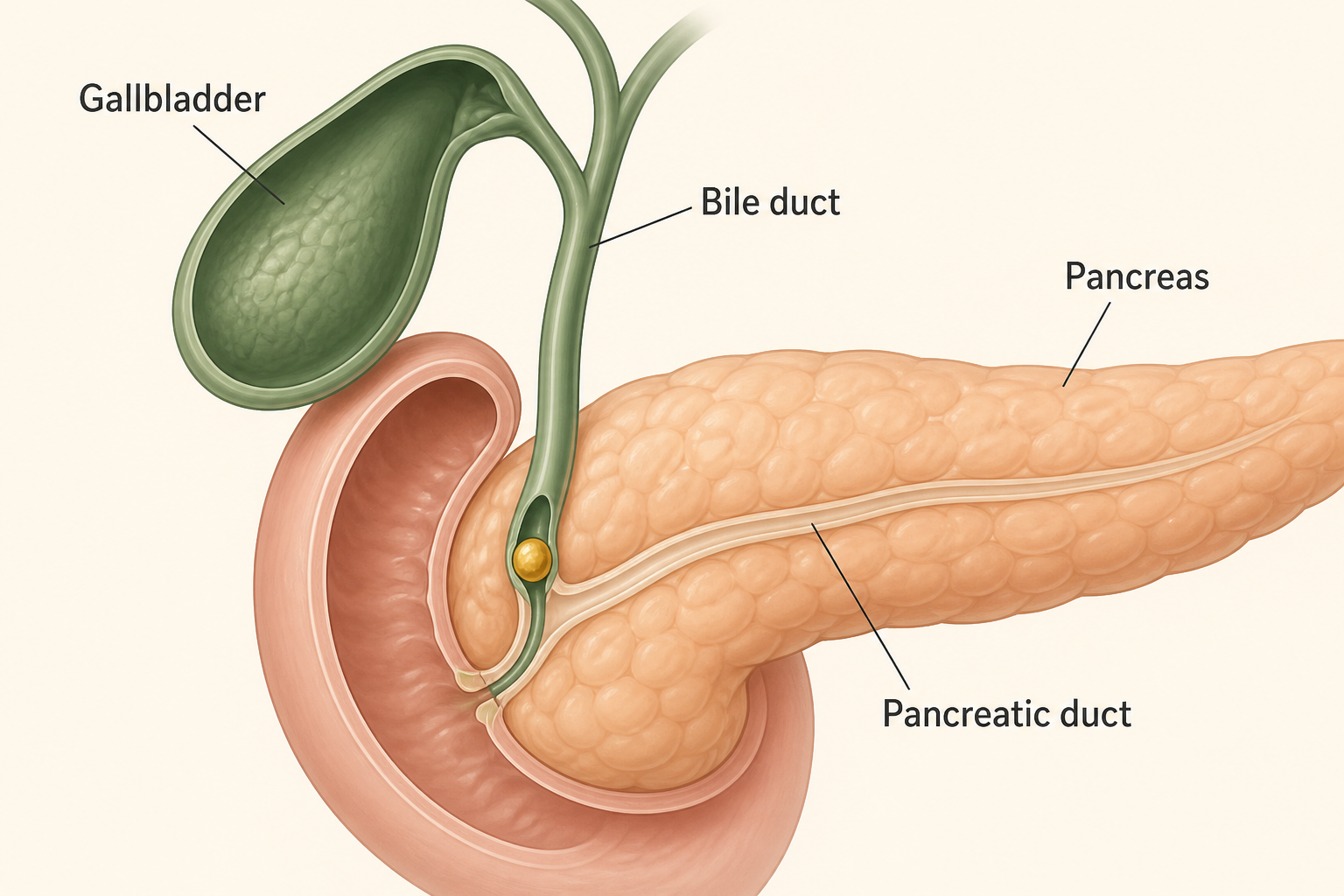
The most common causes are:
- Gallstones, which can block the opening of the pancreas (gallstone pancreatitis)
- Drinking a lot of alcohol
Less common causes include:
- injury to the pancreas, including during surgery
- certain medicines (NHS mentions some steroids and some heart and epilepsy medicines)
- high blood triglycerides
- high blood calcium (hypercalcaemia)
- pancreatic cancer
- procedures such as ERCP, trauma
- other conditions including lupus or mumps
- smoking (listed by Mayo Clinic and ACG among contributors)
- no identified cause (idiopathic)
(NHS; Mayo Clinic; NIDDK; ACG)
In Europe, gallstone disease is the dominant cause in much of southern Europe; alcohol is dominant in much of eastern Europe; northern and western Europe sit in between. (Roberts et al., 2017)
Watch
Acute pancreatitis animation (National Pancreas Foundation)
How it is diagnosed
Acute pancreatitis is usually diagnosed with blood tests and sometimes a CT scan. Ultrasound is often used to look for gallstones. MRI, endoscopic ultrasound, or ERCP may be used in selected cases. (NHS; Mayo Clinic; NIDDK)
The revised Atlanta classification (international consensus, 2012) diagnoses acute pancreatitis in adults when two of three are present:
- abdominal pain consistent with the disease
- serum lipase or amylase ≥ 3 times the upper limit of normal
- characteristic findings on imaging
It also separates interstitial oedematous from necrotising pancreatitis, and grades severity as mild, moderately severe, or severe. It is a classification, not a full treatment guideline. (Banks et al., Gut, 2013)
Treatment in hospital
There is no specific medicine that treats pancreatitis itself. Care is supportive and treats the cause. (Mayo Clinic)
Hospital treatment typically includes:
- intravenous fluids for dehydration
- pain relief
- nutrition — you may eat again when you can do so without vomiting or pain; a feeding tube is sometimes used. ACG notes that early nutrition helps prevent complications such as infection; older advice to eat nothing for a long time is outdated
- antibiotics if there is an infection (they are not routine for every case)
- treatment of the cause: ERCP to remove bile-duct stones; gallbladder removal (cholecystectomy) if gallstones were responsible; help to stop drinking; medicines for very high triglycerides; stopping a culprit drug
(NHS; NIDDK; Mayo Clinic; ACG)
NIDDK notes that for gallstone pancreatitis, operating to remove the gallbladder within a few days of admission lowers the chance of complications in appropriate patients; if pancreatitis is severe, surgery may be delayed while complications are treated. (NIDDK)
Most people start to get better within a week and can leave hospital in 5 to 10 days. Severe disease or complications mean a longer stay. (NHS)
Mild acute pancreatitis usually settles in a few days with rest and treatment. (NIDDK)
International practice is summarised in the IAP/APA 2013 guidelines and the IAP revised guidelines 2025 (18 domains, 96 questions; endorsed by the American Pancreatic Association, European Pancreatic Club, Indian Pancreas Club, and Japan Pancreas Society). Those documents are written for clinicians. (IAP/APA 2013; IAP 2025, Pancreatology)
Complications
Most people recover fully. Some develop problems that need extra treatment:
- cysts / pseudocysts — often settle on their own; may need drainage if infected, large, painful, or bleeding
- pancreatic necrosis — some tissue dies; infection can lead to sepsis and may need antibiotics and procedures or surgery
- breathing problems and kidney failure
- infection
- chronic pancreatitis after repeated attacks
(NHS; Mayo Clinic; NIDDK)
Read more: necrotizing pancreatitis, the 4 stages of acute pancreatitis, the I GET SMASHED causes mnemonic, and pancreatitis life expectancy.
After you leave hospital
NHS and NIDDK both stress: if you have had one attack, another is possible. To lower that risk:
- drink less alcohol, or none at all
- stop smoking
- eat a healthy, lower-fat diet
- follow the plan for gallstones or high triglycerides if that was the cause
Continuing to drink after acute pancreatitis can lead to more attacks and to chronic pancreatitis. Smoking, especially with alcohol-related disease, greatly raises the chance that acute disease becomes chronic, and may raise pancreatic cancer risk. (NHS; NIDDK; Mayo Clinic)
Ask your own clinical team what applies to you. If you need help to stop drinking or smoking, they can point you to local services.
See also: What is pancreatitis · Chronic pancreatitis · Symptoms and causes · Statistics
Last editorial check: 29 August 2026. NHS acute page last reviewed 11 March 2026.
NHS warning signs of severe disease and locked mortality figures from NICE, IAP/APA, Banks et al. and Werge et al. are summarised on Can you die from pancreatitis? Billable ICD-10-CM codes under K85 (etiology + necrosis/infection) are on Acute pancreatitis ICD-10; full hub: Pancreatitis ICD-10.