Urgent. Sudden, severe abdominal pain is a medical emergency until a doctor says otherwise. Call 112 or go to hospital if pain is severe, spreads to your back, or comes with vomiting, fever, a fast heartbeat, or difficulty breathing.
This page is not medical advice. Medical disclaimer.
The main symptom of both acute and chronic pancreatitis is pain in the upper abdomen that may spread to your back. People feel that pain in different ways. (NIDDK)
Acute pancreatitis — symptoms
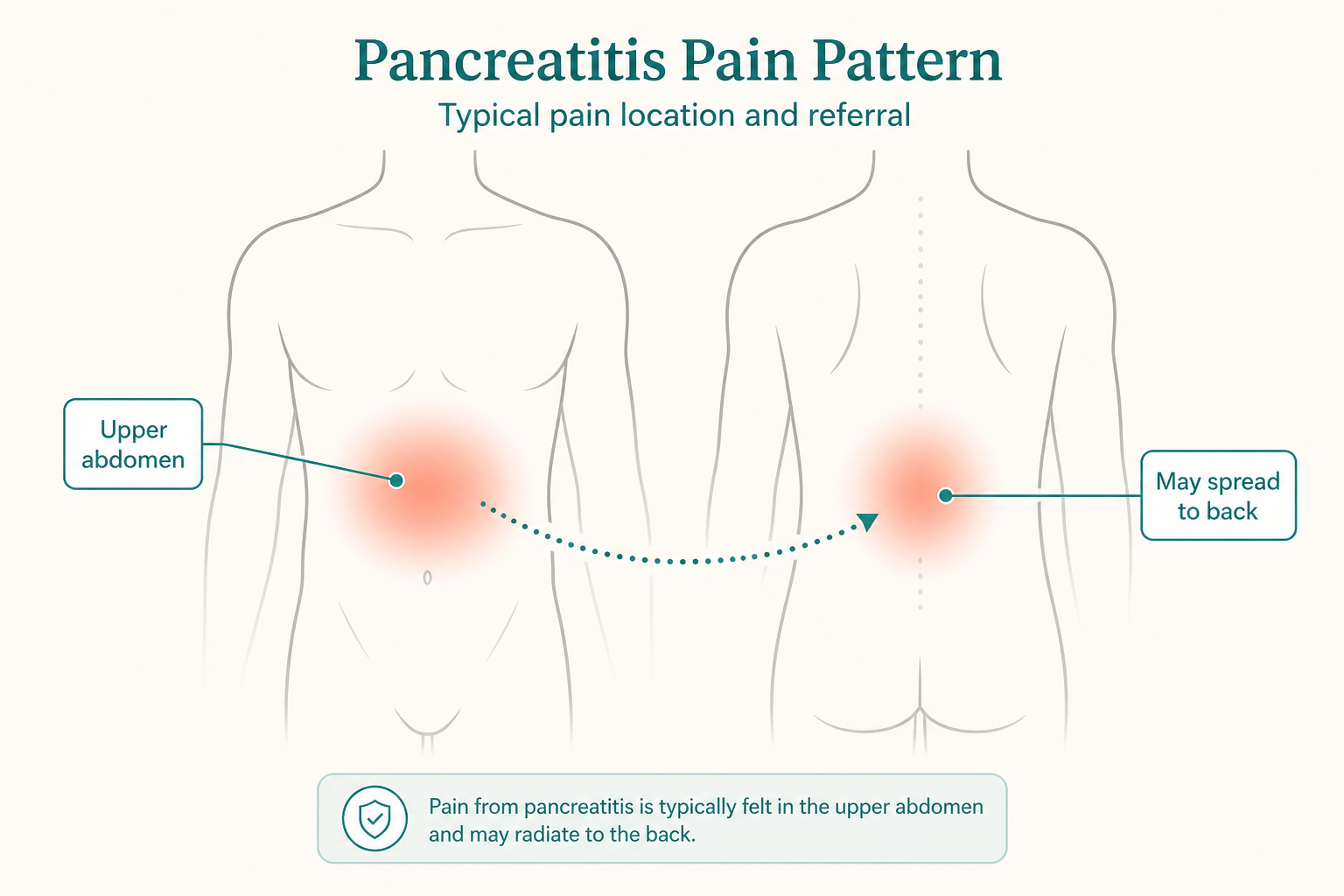
Pain often:
- begins slowly or suddenly in the upper abdomen
- sometimes spreads to the back or shoulders
- can be mild or severe and may last several days
- may feel worse after eating
- may feel worse when you move or lie down, and better if you lean forward or curl up
Other symptoms may include fever, nausea and vomiting, a fast heartbeat, a swollen or tender abdomen, and shortness of breath. (NIDDK; Mayo Clinic; NHS)
NHS describes the pain as often severe, sharp, or knife-like. ACG calls it among the worst pains a patient can experience, with nausea, vomiting, and loss of appetite. (NHS; ACG)
People with acute pancreatitis usually look and feel seriously ill and need to see a doctor right away. (NIDDK)
Chronic pancreatitis — symptoms
Most people feel pain in the upper abdomen; some have no pain. The pain may spread to the back, become constant and severe, worsen after eating, or, in later disease, fade. (NIDDK)
Other symptoms:
- diarrhoea
- greasy, foul-smelling stools that may float
- nausea and vomiting
- bloating
- unintended weight loss
- symptoms of diabetes (thirst, hunger, passing a lot of urine)
(Mayo Clinic; NHS; ACG)
Some people only develop symptoms after they get complications. (Mayo Clinic)
When to get help
Call 112 / emergency care now if you have sudden severe tummy pain and:
- it spreads to your back
- you have bloating that does not go away
- a fast heartbeat or difficulty breathing
- blue or bruised-looking skin around the navel, waist, or upper outer thigh
See a doctor urgently (NHS: urgent GP or equivalent) if sudden severe tummy pain does not go away or keeps coming back, or you have a high temperature or feel hot, cold, or shivery. (NHS — Acute pancreatitis)
NIDDK also lists jaundice (yellow skin or eyes) among reasons to seek care right away. Mayo Clinic advises making an appointment for sudden belly pain or pain that does not improve, and seeking immediate help if the pain is so severe you cannot sit still or find a comfortable position. (NIDDK; Mayo Clinic)
Causes of acute pancreatitis
I GET SMASHED is a teaching mnemonic for these causes, not a complete list. If tissue dies during a severe attack, see necrotizing pancreatitis.
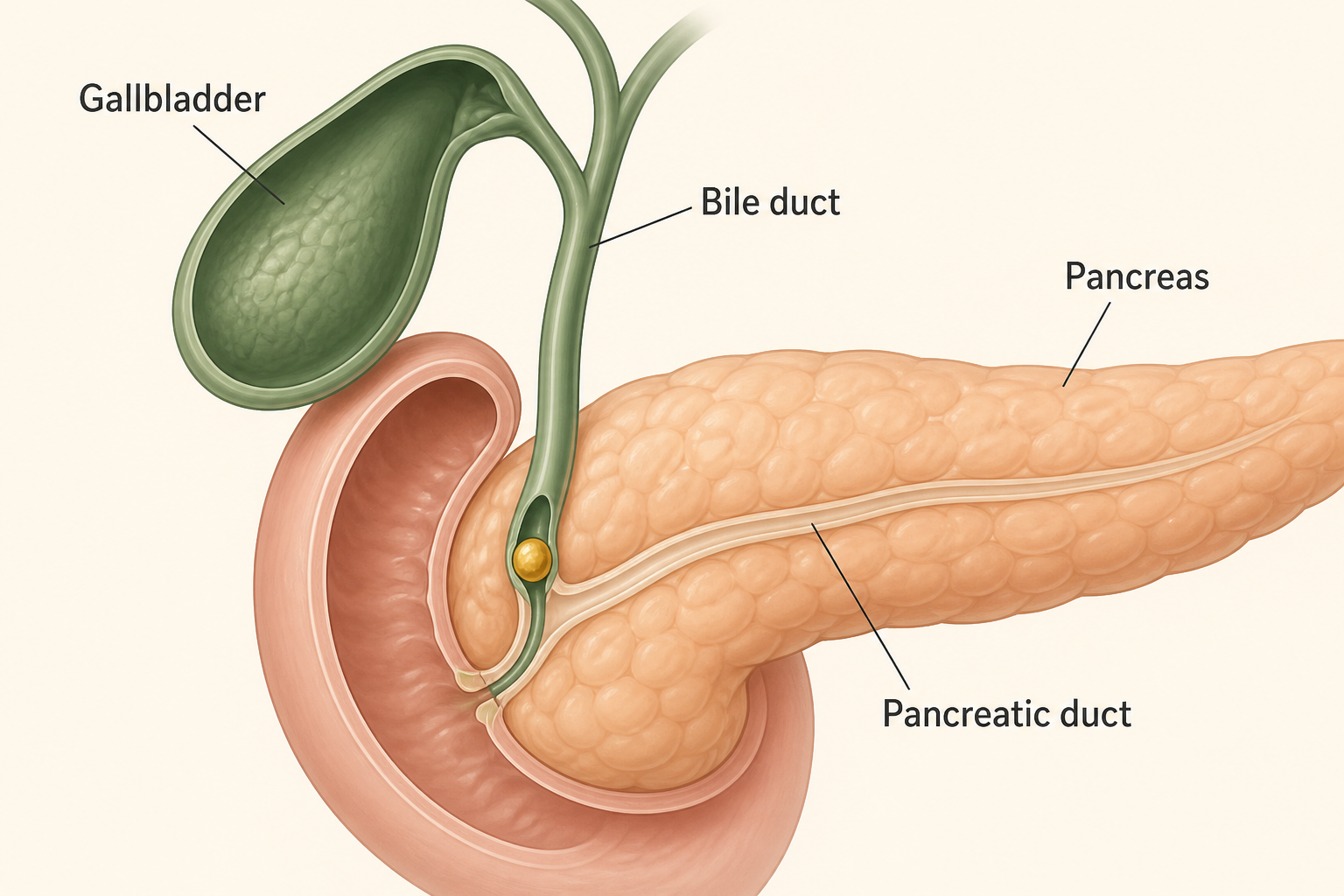
NIDDK: the most common cause of acute pancreatitis is gallstones. Stones passing through or lodging in a bile or pancreatic duct inflame the pancreas. (NIDDK)
NHS: the most common causes are gallstones and drinking a lot of alcohol. (NHS)
Mayo Clinic lists:
- blockage of the bile duct by gallstones
- heavy alcohol use or cigarette smoking
- certain medicines
- high triglycerides
- high calcium
- pancreatic cancer
- injuries from endoscopy, trauma, or surgery
NIDDK also lists genetic disorders of the pancreas, infections (viruses or parasites), abdominal injury, ERCP done for another reason, and pancreas divisum. (NIDDK)
When no cause is found, it is called idiopathic pancreatitis. (Mayo Clinic; NIDDK)
Causes of chronic pancreatitis
NHS: the most common cause is drinking alcohol. Keep drinking after acute attacks and the pancreas can become permanently scarred. (NHS)
NIDDK: the most common causes of chronic pancreatitis are heavy alcohol use and genetic disorders of the pancreas. Other causes: blockage of the pancreatic duct, high blood lipids, high blood calcium. (NIDDK)
Mayo Clinic adds damage from repeated acute pancreatitis, inherited conditions, high triglycerides, and autoimmune disease of the pancreas. (Mayo Clinic)
NHS also lists smoking; genes including cystic fibrosis; the immune system attacking the pancreas; the pancreas not developing properly; and some medicines (including some antibiotics and diabetes medicines). (NHS)
ACG: the most common causes are excessive alcohol, heavy smoking, and recurrent acute pancreatitis, including from genetic mutations; the cause is unknown in nearly a third of patients. (ACG)
Risk factors
Factors that increase risk (Mayo Clinic and NIDDK):
- being male
- in US data, being Black compared with White
- family history of pancreatitis
- personal or family history of gallstones
- more than four alcoholic drinks a day
- cigarette smoking (about three times the risk vs never smoking; quitting can decrease risk)
- obesity (BMI 30 or higher)
- diabetes
(Mayo Clinic; NIDDK)
What is not a cause of confusion on this site
This page does not list herbal products, detoxes, or supplements as treatments or causes unless a medicine is a documented trigger — that judgement belongs to your clinician and your medicines list.
Lowering risk
You cannot prevent every case. Evidence-based steps:
- healthy weight and a balanced diet to lower gallstone risk; gallbladder surgery after gallstone pancreatitis when your team recommends it
- avoid alcohol if you have had pancreatitis
- stop smoking
- review medicines with a clinician
- eat vegetables, fruit, whole grains, and lean protein; avoid very high-fat eating patterns; stay hydrated
(Mayo Clinic; NIDDK; NHS; ACG)
See also: Acute pancreatitis · Chronic pancreatitis · Statistics
Last editorial check: 29 August 2026.